
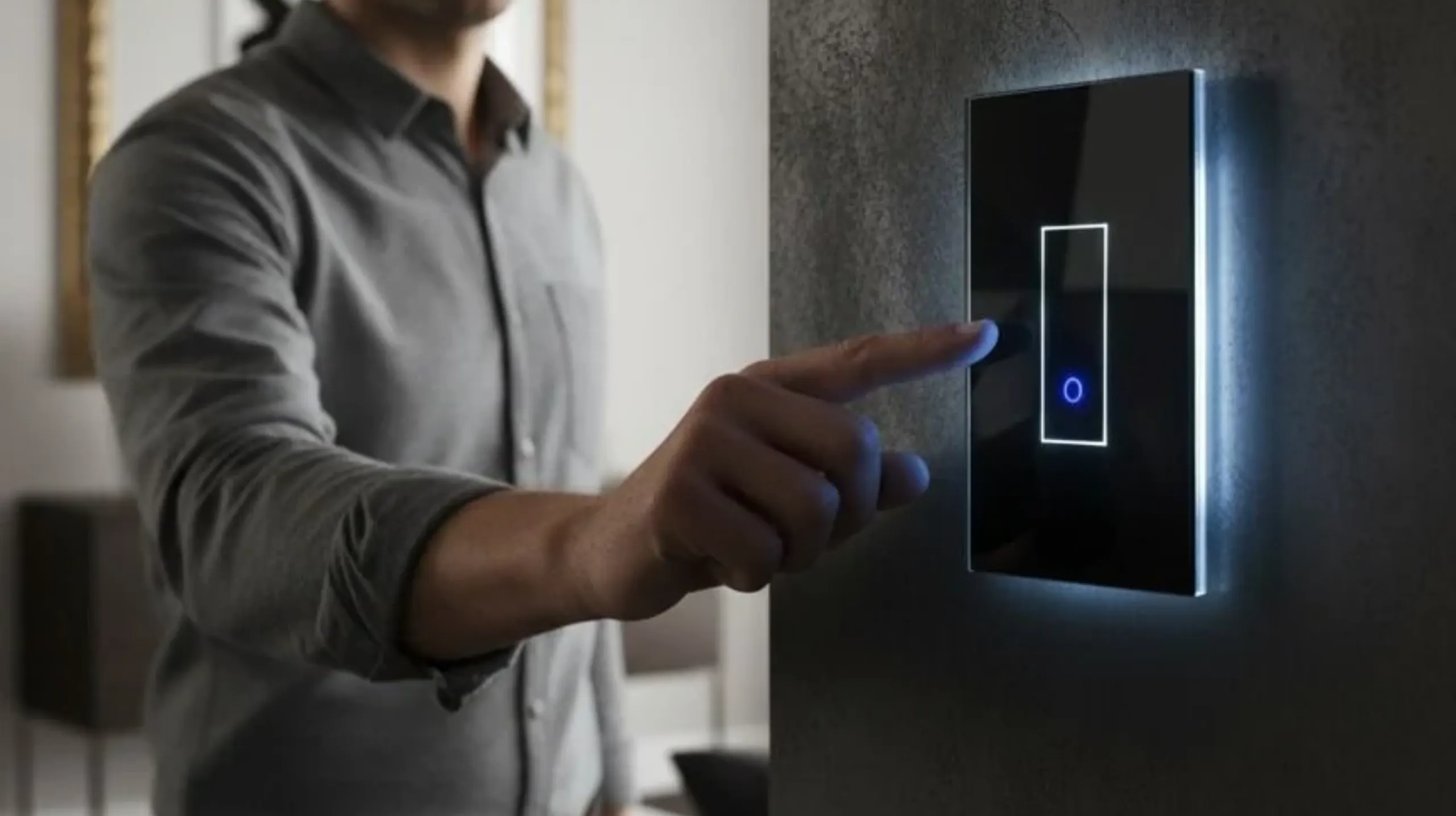
A lighting control system does more than switch lights on and off. In a commercial building it combines sensors, controllers, dimmable drivers and software to deliver the right light at the right time and place, and to show facility teams how spaces are actually used. In the UAE, where cooling dominates energy use and many buildings combine large glazed facades with long operating hours, lighting control touches energy performance, occupant comfort and day-to-day operations.
This guide explains how a lighting control system works, which control strategies matter, how protocols such as DALI, KNX and BACnet fit together, how lighting connects to a building management system, and what project teams in the UAE should consider before specifying one.
What a Lighting Control System Does in a Commercial Building
A lighting control system manages light output across a building through automatic or centrally controlled means. Instead of every luminaire being governed by a wall switch, the system groups lights into zones and controls them by schedule, occupancy, available daylight or user preference. The main elements are:
- Sensors: occupancy or vacancy sensors and daylight (lux) sensors
- Input devices: wall switches, push buttons, touch panels and mobile or web apps
- Controllers: store schedules, scenes and logic and coordinate zones
- Dimmable drivers or relays: adjust light output at the luminaire or circuit
- Gateways and network infrastructure: connect the lighting network to other building systems
- Software: configuration, scheduling, monitoring and reporting
Together these allow scene control, scheduling, dimming and building-wide commands such as an all-off at the end of the day.
Control Strategies That Deliver Results
Controls save energy by reducing how long lights run and how brightly they run. Which strategy fits depends on the space.
Scheduling and time-based control
Offices, retail areas, car parks and corridors can switch or dim lights on a timetable, with an override for out-of-hours use. Schedules need to be kept up to date as occupancy patterns change, otherwise they drift.
Occupancy and vacancy sensing
Meeting rooms, restrooms, storerooms, stairwells and zoned open-plan areas suit sensors. Occupancy mode turns lights on and off automatically. Vacancy mode requires someone to switch lights on and then turns them off automatically, which often saves more in spaces where daylight may make lights unnecessary.
Daylight harvesting
A light sensor measures available daylight and dims luminaires near windows when natural light is sufficient. In the UAE, daylight is plentiful, but so are glare and solar heat gain. Daylight harvesting works best when it is coordinated with shading and glazing design, and when sensors are calibrated during commissioning. Poorly set sensors are a common reason the strategy underdelivers.
Task tuning and scene control
Tuning sets the maximum output of each zone to suit the task, rather than leaving every luminaire at full output. Lighting designers typically work to recommended levels for the activity, such as those in EN 12464-1 for indoor workplaces. Scene presets let a meeting room switch between presentation, discussion and cleaning modes with a single button.
What the evidence says
A widely cited meta-analysis by Lawrence Berkeley National Laboratory reviewed 240 savings estimates from 88 published sources. It found average lighting energy savings of 24% for occupancy-based strategies, 28% for daylighting, 31% for personal tuning, 36% for institutional tuning and 38% for combined approaches. It also found that simulations overestimated daylighting savings by at least 10 percent in real buildings. These are averages from published studies, not a prediction for any single UAE building, so treat them as a reference range rather than a guarantee.
There is a second benefit in air-conditioned buildings. Electric lighting ends up as heat inside the space, so reducing lighting runtime also reduces some of the cooling load.
Wired, Wireless and Hybrid: Choosing the Right Protocol
The protocol decides how easily devices from different manufacturers work together, how easily the system can grow, and how simply lighting data reaches the BMS.
| Approach | Typical role | Strengths | Points to check |
| DALI / DALI-2 (IEC 62386) | Digital control of luminaires and sensors | Addressable devices, feedback and diagnostics, certification that supports multi-vendor interoperability | Bus topology and power limits; confirm DALI-2 or D4i certified products |
| KNX | Room and building control across lighting, blinds and HVAC | Open standard with a large multi-vendor ecosystem | Programming tools and licensing; gateway to the BMS |
| 0-10 V analogue | Simple dimming | Low complexity, familiar to installers | No individual addressing or feedback; wiring per zone |
| BACnet (ISO 16484-5) | Supervisory integration with the BMS | Open and widely used for building automation integration | Usually applied above room or luminaire level; needs mapping or a gateway |
| Wireless (RF or mesh) | Retrofits and hard-to-wire areas | Less cabling and faster installation | Coverage, interference, security, battery maintenance and vendor interoperability |
One common pattern uses DALI at luminaire level, a lighting or room controller in the middle, and BACnet at supervisory level so the BMS can see status, alarms and energy data. The right mix depends on the building, the consultant’s specification and the maintenance team’s skills.
The DALI Alliance has moved certification to DALI-2 and now includes control devices such as sensors and application controllers, which improves multi-vendor compatibility. Specifying certified products is an easy way to reduce integration risk.
Integrating Lighting Control With a BMS and Energy Monitoring
Lighting is one of several systems a modern integrated building management system can bring onto a single platform. Connecting the two delivers practical benefits:
- Shared schedules: lighting can follow the same occupancy calendar as HVAC.
- Alarms and diagnostics: the BMS can flag driver or sensor faults instead of waiting for a complaint.
- Energy data: lighting circuits metered through the system feed an energy management system UAE facility teams can use for reporting, alongside broader energy data management UAE practices.
- Operator visibility: one dashboard instead of separate lighting software.
Integration usually happens through a gateway that maps the lighting controller to BACnet or Modbus, so the points to be shared (status, schedules, alarms, energy) should be agreed during design.
Emergency lighting deserves its own mention. The DALI Alliance has extended DALI-2 certification to control gear for self-contained emergency lighting and says this supports integration with building management systems, including automated testing and reporting. Requirements for emergency lighting are set by local authorities, so confirm them with your consultant.
When the systems are integrated and the design allows it, occupancy data from lighting sensors can also inform HVAC scheduling. AIA’s overview of energy management solutions shows how metering and reporting fit around a BMS.
UAE Design Considerations
Cooling interaction. Lighting heat adds to the cooling load, so a well-controlled lighting system is part of the energy strategy, not an add-on.
Daylight and glazing. Large glass areas bring daylight but also glare and heat. Coordinate daylight sensors with blinds or shading, and plan the zoning so rows of luminaires near the facade dim independently of the core.
Compliance context. In Dubai, Dubai Municipality’s Al Sa’fat green building system includes mandatory requirements for all new buildings, with the Silver Sa’fa as the baseline. In Abu Dhabi, the Estidama Pearl Rating System applies. Ask your sustainability consultant to check the current edition’s provisions rather than assuming a given control strategy satisfies them.
Equipment ratings. High ambient temperatures, dust in industrial sites and exposure in car parks and external areas all affect equipment choice. Check temperature ratings and ingress protection for each location.
Building type. Offices benefit most from daylight and occupancy control. Hotels need scene control and guest-room integration. Retail needs flexible scenes and schedules. Hospitals need reliability and clear emergency lighting arrangements. Warehouses and car parks gain from occupancy-based dimming.
New Build or Retrofit?
New build. Bring the lighting designer, electrical engineer and BMS consultant together early. Zoning decisions, sensor locations and the wiring infrastructure are cheapest to get right at design stage.
Retrofit. Start with a survey of existing luminaires, drivers, wiring and access. Existing luminaires may not be dimmable, and wireless or hybrid systems can reduce disruption where new cabling is difficult. In both cases, confirm that the proposed controls are compatible with the luminaires.
A Practical Specification Checklist
- Define the spaces: zones, operating hours, occupancy patterns and task types.
- Set lighting targets with the lighting designer.
- Choose a control strategy for each zone type: scheduling, occupancy, daylight or tuning.
- Select open protocols and ask for certified products such as DALI-2 devices.
- Define BMS integration points: schedules, status, alarms and energy data.
- Specify commissioning: sensor calibration, scene programming and witnessed testing.
- Require documentation and training: zoning drawings, programming files and user guides.
- Agree maintenance and support before handover.
Cost and Return: Questions to Ask
Cost depends on the number of zones and luminaires, the protocol, sensor density, the level of BMS integration, commissioning effort and ongoing support. Return depends on the existing lighting, operating hours and how the building is used.
Ask bidders how they will establish a baseline and how savings will be measured, instead of accepting a generic percentage. Dimming and switching can also reduce hours at full output, which may help luminaire life, but that depends on the product, so ask for manufacturer data.
How AIA Approaches Lighting Control
Advanced Integration Automation (AIA) describes its lighting control system offering as complete lighting control solutions covering supply, installation and commissioning, with control of multiple circuits or scene settings through a single button press. AIA says systems can be monitored from a phone or tablet, including an all-off command, and can run by occupancy or lux level.
AIA states that its lighting control can integrate with building management and smart home platforms, and that support includes system calibration, sensor checks, firmware updates and fault diagnostics. Lighting also sits within AIA’s broader home and office automation work, which suits projects that want lighting, climate and security managed together. For earlier background on the residential side, see AIA’s piece on smart lighting in Dubai homes.
If you are scoping a commercial project, you can contact the AIA team to discuss requirements.
Conclusion
A good lighting control system starts with how a space is used, not with a product. Pick strategies that suit each zone, specify open and certified protocols, plan the BMS integration at design stage, and write commissioning into the contract. In the UAE, that approach lets lighting contribute to energy performance and comfort instead of becoming one more system the facility team works around.
Frequently Asked Questions
1. What is a lighting control system? It is a system of sensors, controllers, switches and dimmable drivers that manages when and how brightly lights operate. It can work by schedule, occupancy, daylight or user preference.
2. How does a commercial lighting control system save energy? It reduces runtime and output through scheduling, occupancy sensing, daylight dimming and tuning. Published studies show average savings of roughly 24% to 38% depending on the strategy, though results vary by building.
3. What is the difference between DALI and KNX? DALI is a protocol dedicated to lighting control, defined in IEC 62386. KNX is a broader open standard that can also control blinds and HVAC, and projects often combine them or connect both to a BMS.
4. Can a lighting control system integrate with a BMS? Yes. Integration usually uses a gateway that maps lighting status, schedules, alarms and energy data to protocols such as BACnet or Modbus.
5. Is wireless lighting control suitable for a retrofit? Often, because it reduces cabling work. Check coverage, security, interference, battery maintenance and compatibility between vendors before choosing it.
6. Do LED lights still need a lighting control system? LEDs reduce energy on their own, but controls add scheduling, dimming, occupancy sensing and data. LEDs also work well with frequent switching and dimming.
7. What is daylight harvesting, and does it suit UAE buildings? It dims electric lights when enough natural light is available. It can suit perimeter zones in the UAE, but glare, heat gain and shading must be coordinated and the sensors calibrated at commissioning.
8. How do I choose a lighting control system for an office building? Start with zones, working hours and task requirements. Then choose open protocols, plan BMS integration, specify commissioning and confirm the support arrangements.
9. What maintenance does a lighting control system need? Typical tasks include sensor checks and recalibration, firmware updates, fault diagnostics and periodic schedule reviews as building use changes.
10. Can lighting control be part of home and office automation? Yes. Lighting scenes and schedules can be combined with climate, security and shading control on one platform, which suits properties that want one interface.
Comments are closed.